
MG-LZ8™: Inside South Africa’s Most Rigorously Tested Reishi Extract
- 29 April 2026
- Marc Myburgh
TRADE RESEARCH BRIEF
What the laboratory evidence means for your practice and your patients
Original review by Daleen Totten, Natural Medicine World (April 2026) | Summarised for wholesale trade reference
Reishi (Ganoderma lucidum) has more than two thousand years of use in Eastern medicine and a substantial body of modern pharmacological research behind it. The challenge for practitioners has never been the science — it has been sourcing a product that actually contains what it claims to. A 2017 independent audit of 19 commercially available reishi supplements found that only 5 matched their labels, with starch-based grain filler present in 68% of products tested.¹
MG-LZ8™, produced by Cape-based Mushroom Guru and sold as part of their GanodermaGOLD™ range, represents a genuinely different category. It is backed by five independent laboratories across eight years of documented testing — an evidence profile that is uncommon for any South African supplement product, and rare for a functional mushroom extract globally.
This brief summarises the key scientific findings for practitioners who want to understand the evidence before recommending or stocking the product.
Reishi at a Glance: What the Research Supports
The compound classes responsible for reishi’s documented effects are now well characterised: triterpenoids (primarily ganoderic acids) and immunomodulatory polysaccharides including beta-glucans. The evidence base spans several therapeutic areas:
- Immune & Organ Support: Immune modulation: regulatory rather than simply stimulatory, capable of both upregulating and calming immune activity depending on the state of the system¹¹
- Liver and kidney protection through antioxidant and cytoprotective mechanisms¹⁰
- Blood sugar stabilisation, cholesterol reduction and blood pressure regulation via HPA axis modulation
- Cognitive protection and neuroprotective potential, particularly relevant in age-related decline
- Stress resilience through natural cortisol regulation rather than forced adrenal stimulation
For practitioners, the key distinction is regulatory immune modulation — reishi polysaccharides have been shown to increase immune activity when it is suppressed and reduce inflammation when it is excessive, making this an adaptogenic immune intervention rather than a simple stimulant.
Why Most Reishi Products Fail Quality Testing
Three failure modes account for nearly all substandard reishi supplements in the market:
- Grain filler: Mycelium grown on grain substrate, then ground whole — producing a product high in starch and low in active compounds
- Incomplete extraction: Single-phase extraction (water only or ethanol only), capturing only one of the two distinct compound classes present in genuine reishi
- Spent biomass: Spent biomass: raw material from which active compounds have already been commercially extracted, dried, powdered and re-sold without disclosure
|
★ |
The 2017 Scientific Reports audit (Wu et al.) found authentic ganoderic acids in fewer than half of tested products, and primary immunoactive 1,3-β-D-glucan confirmed in only 5 of 19. South Africa uses the same global supply chains. |
What Makes MG-LZ8™ Structurally Different
1. Antler Morphology: A Biochemically Superior Starting Material
Most commercial reishi is grown as a flat conk (bracket mushroom), distributing biological resources across a broad surface. Mushroom Guru cultivates a 35–40cm straight antler through controlled CO₂ and ventilation management — maintaining the organism in its most chemically productive growth phase before reproductive switching occurs.
A 2018 peer-reviewed study (Sudheer et al., Fungal Biology) confirmed that antler-type fruiting bodies contained approximately two-fold higher concentrations of phenolics, flavonoids, water-soluble polysaccharides and triterpenoid content compared to standard fruiting bodies.³
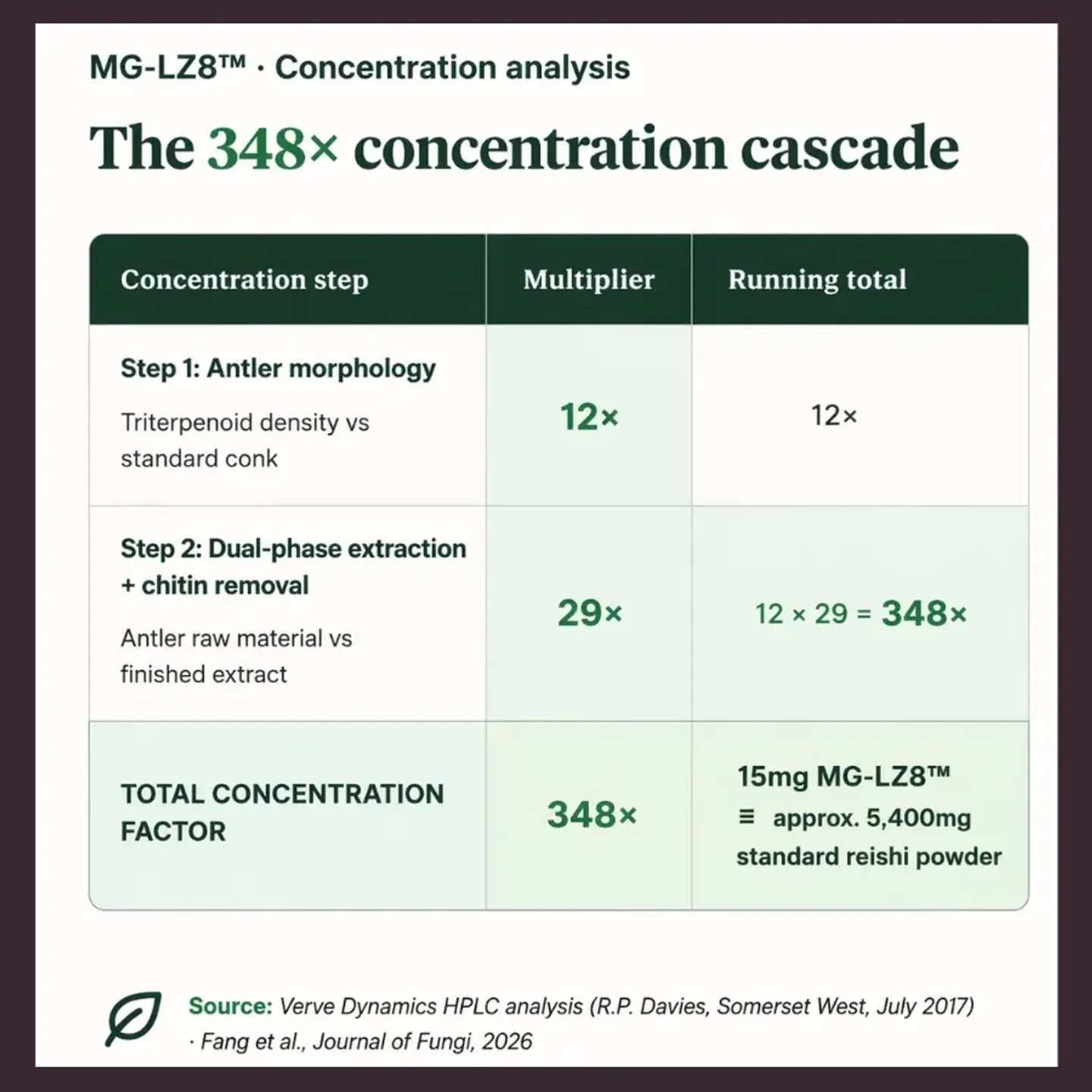
Independent HPLC analysis by Verve Dynamics (Somerset West, 2017) compared Mushroom Guru’s antler material against wild-harvested Knysna reishi and a commercially imported powder under identical conditions. Expert chromatographic interpretation indicated approximately a 12-fold triterpenoid concentration advantage for the antler material before any extraction had taken place.⁴
2. Dual-Phase Extraction: Capturing the Full Bioactive Spectrum
Reishi contains two pharmacologically active compound classes that cannot be co-extracted by any single method:
- Class 1: Fat-soluble ganoderic acids and triterpenoids require ethanol extraction
- Class 2: Water-soluble polysaccharides, beta-glucans and the LZ-8 immunomodulatory protein require hot water extraction
Mushroom Guru runs both phases sequentially and combines the outputs into a single finished extract, removing the chitin cell wall barrier in the process. The result: a complete-spectrum extract in a bioavailable form.
Process efficiency: 1kg of finished MG-LZ8™ is produced from 12kg of raw antler material. The internationally recognised NAMMEX benchmark standard requires 16kg of mushroom per 1kg of extract. Mushroom Guru captures more compound classes at a more efficient input ratio due to proprietary technique development refined over 13 years.⁴ʸ⁵
3. The 348× Concentration Cascade
|
★ |
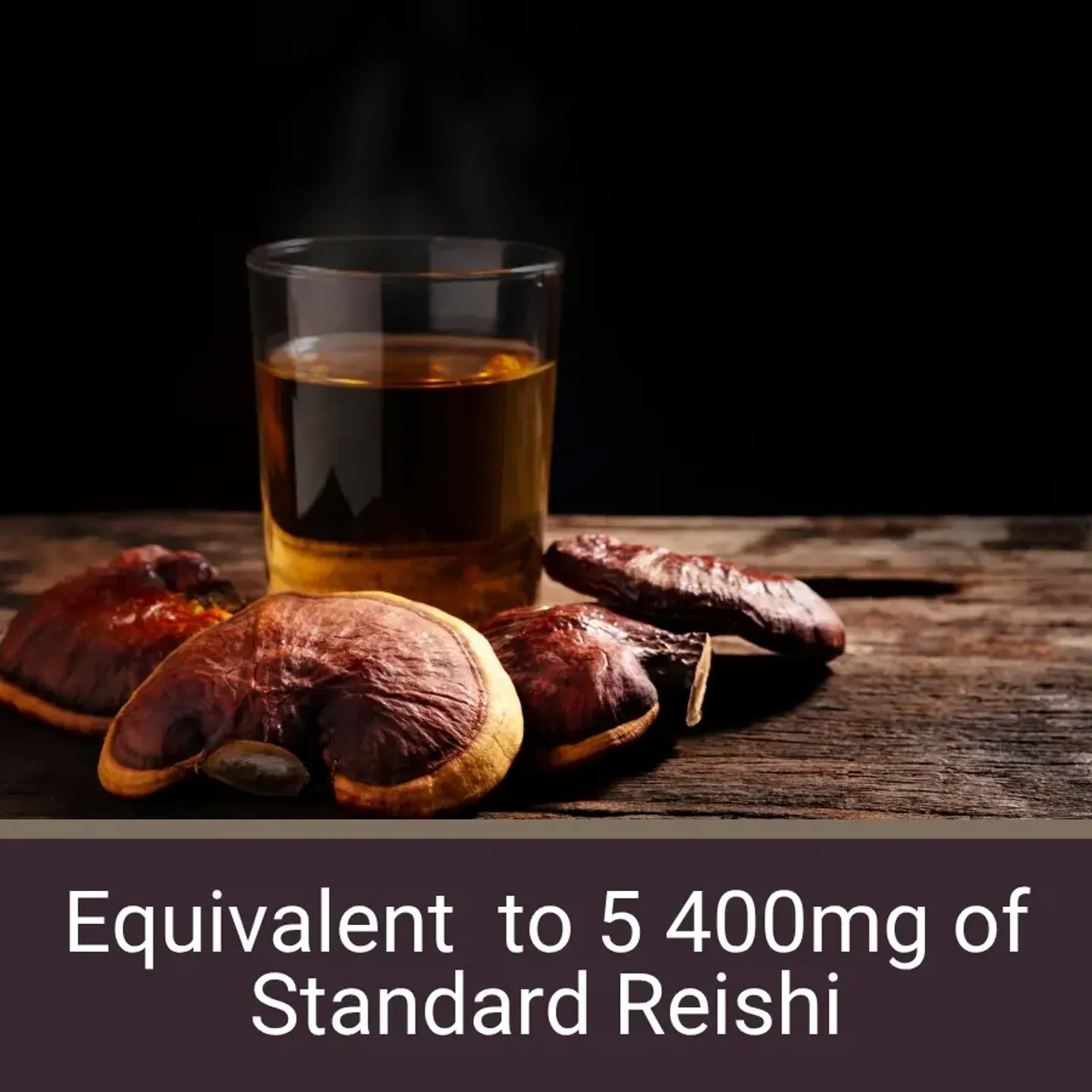
12× antler triterpenoid advantage × 29× extraction concentration factor = 348× relative potency versus standard imported conk reishi powder. One 15mg capsule of MG-LZ8™ delivers the active compound equivalent of approximately 5,400mg of standard reishi powder. |
Note on this figure: the 12× is based on expert HPLC chromatographic interpretation rather than formally quantified mass spectrometry comparison of antler versus wild conk. The 29× extraction factor is from Verve Dynamics’ HPLC analysis of total chromatographic area pre- and post-extraction under identical conditions.⁴
The Independent Laboratory Evidence
Species Verification
Inqaba Biotechnical Industries (Pretoria, 2025) conducted dual-marker molecular identification. ITS marker: 99.69% identity to Ganoderma sichuanense (synonym G. lingzhi, the pharmacopoeial reishi species). EF1-α marker: 100% identity. This is the definitive species authentication approach — morphology alone cannot reliably distinguish Ganoderma species.¹²
Mass Spectrometry: Compound Profile and Benchmark Comparison
Prof. Marietjie Stander at Stellenbosch University’s Central Analytical Facility (2021) conducted MS/QTOF mass spectrometry comparing MG-LZ8™ against:⁵
- A leading South African pharmaceutical competitor’s reishi product: MG-LZ8™ showed 11 identified triterpenoid compounds; the comparator showed little to no detectable triterpenoids, consistent with low-quality raw material or spent biomass.
- The NAMMEX international benchmark standard: MG-LZ8™ demonstrated 48.8% higher total integration value across all identified compounds, with one compound (GA/B) showing a 57-fold advantage for the antler extract.
This comparison establishes MG-LZ8™ as the analytical reference standard for antler-based reishi extraction, a distinct and measurably more concentrated category from traditional conk-based products.
Immunological Activity: University of Louisville Trial
In 2018, Mushroom Guru submitted MG-LZ8™ to Prof. Vaclav Větvicka at the University of Louisville (Kentucky), one of the world’s leading β-glucan and immune modulation researchers with over 250 peer-reviewed publications.⁹
- At the 100 µg dose, active neutrophils (cells responsible for phagocytosis of foreign material) rose from 31% baseline to 47% — a ~52% relative increase in phagocytic activity within 24 hours of a single dose
- IL-2 (a key T-cell activation signalling cytokine) rose more than 200-fold over baseline at the same dose
- No cytotoxic effects on cells were observed at any dose tested
|
★ |
Prof. Větvicka’s conclusion: “MG-LZ8™ is a biologically active sample with significant effects on immune reactions and showed no toxic effects on cells.” |
Starch Testing: Grain-Free Confirmation
SANAS-accredited laboratory Mérieux NutriSciences (October 2023) tested MG-LZ8™ for starch content and found less than 0.50g per 100g — below the detection limit.⁶ Real reishi mushroom contains no starch. The 2017 audit found starch (grain filler) in 68.4% of tested products. This result confirms the absence of mycelium-on-grain biomass.
Heavy Metal Purity
Verve Dynamics heavy metal testing (October 2023) produced the following results against international limits:⁴
- Lead: 17× below international limit
- Cadmium: 55× below international limit
- Mercury: 50× below international limit
- Arsenic: undetectable
Consistent microbial compliance was also confirmed across batches tested three years apart. This is particularly relevant for practitioners working with immunocompromised patients or individuals with compromised detoxification capacity.
Glycobiology: The Immune Communication Dimension
MG-LZ8™ contains five of the eight essential glyconutrients identified by Dr. Steve Nugent as required for immune cell communication: glucose, mannose, galactose, fucose and xylose. Most people obtain only two of these from their modern diet.
These sugars form complex polysaccharide structures that engage immune cell receptors (Dectin-1 and the mannose receptor CD206) directly on contact. The LZ-8 protein — the first mushroom immune protein ever discovered, unique to G. lucidum and absent in all other fungi — has a structure remarkably similar to human antibodies. Rather than forcing the immune system to work harder, LZ-8 restores natural communication pathways the body already recognises.
Emerging Research: Oncology Support Applications
Research from the University of Pittsburgh has demonstrated that myeloperoxidase (MPO), an enzyme released by activated neutrophils, can catalytically break down carbon-based nanomaterials — a finding with potential relevance to oncology, where such materials are increasingly used as drug delivery vehicles.⁷ʸ⁸
Many chemotherapy protocols reduce neutrophil counts, and therefore MPO availability, potentially limiting the body’s ability to clear residual nanocarrier material post-treatment. MG-LZ8™’s demonstrated ability to increase neutrophil phagocytic activity by ~52% raises a theoretical question about whether β-glucan-mediated immunomodulation may support clearance and tissue protection pathways following oncology treatment.
|
★ |
Important: A clinical trial to investigate this has been proposed at Stellenbosch University and Tygerberg Academic Hospital but has not yet commenced. Any direct link between MG-LZ8™ and nanoparticle clearance remains theoretical pending that data. |
The GanodermaGOLD™ Product Range
Every product is built on the same MG-LZ8™ dual-phase extract. Dose and delivery format vary by application:
- 01 Immune Modulator Capsules: 15mg MG-LZ8™ per capsule, cassava root powder filler (grain-free). Daily systemic immune support. One capsule per day.
- 02 Targeted Therapy Drops: 2,400mg MG-LZ8™ per 30ml bottle via CHD-FA™ (Carbohydrate-Derived Fulvic Acid) + 3% pharmaceutical-grade DMSO. Sublingual absorption. 8 drops twice daily = 80mg/day. Clinical-intensity format for intensive immune support and post-treatment recovery.
- 03 Skin Serum: 24mg MG-LZ8™ per 30ml serum via 20% DMSO + 1% Namibian Myrrh. Transdermal delivery into lymphatic tissue. Primary applications: lymphatic support, rheumatoid arthritis, wound care and dermatological conditions.
- 04 Arnica Rub Gel: 40mg MG-LZ8™ + 150mg Arnica + 100mg CBD per 50ml jar via 7% DMSO. Three-mechanism pain and inflammation topical, developed with Canabliss. Applications: rheumatoid arthritis, muscle recovery, sprains and bruising.
- 05 Honey Snap Pack: 8mg MG-LZ8™ per 7g snap pack in Cape Eucalyptus honey (high propolis content). Single-serve format for daily maintenance or trial activation.
- 06 Pet Drops: 240mg MG-LZ8™ per 15ml bottle via CHD-FA™ + 3% pharmaceutical-grade DMSO. Alcohol-free. Weight-based dosing. For dogs and cats.
Contraindications: For Practitioner Reference
MG-LZ8™ is classified as a food supplement under South African law. However, its immune-modulating and blood-thinning properties create specific clinical considerations:
Do not use tincture or capsules with:
- Blood-thinning medication (warfarin, heparin, newer anticoagulants) — may increase bleeding risk
- Active autoimmune conditions on immunosuppressive therapy
- Post-organ-transplant anti-rejection medication
- Pregnancy or breastfeeding
- Known allergy to reishi mushrooms
Use with caution or delay commencement if:
- Severe liver impairment (liver enzymes above 3× normal)
- Severe renal impairment (kidney function below 30%)
No serious adverse events have been reported in commercial use to date.
Summary: Key Points for Practitioners and Stockists
- Species verified by dual-marker molecular ID (ITS 99.69%, EF1-α 100%) — the definitive method
- Antler morphology confirmed — a distinct and more bioactive growth form than commercial conk
- Dual-phase extraction captures both fat-soluble triterpenoids and water-soluble beta-glucans in one product
- 348× relative concentration versus standard imported reishi powder; 1 capsule = ~5,400mg equivalent
- 48.8% higher total compound integration than NAMMEX international benchmark in direct mass spectrometry comparison
- 52% increase in neutrophil phagocytic activity in University of Louisville independent trial (Prof. Větvicka)
- Zero cytotoxicity confirmed across two independent laboratory assessments
- Undetectable starch content (SANAS-accredited Mérieux NutriSciences) — no grain filler
- Heavy metals 17–55× below international limits; arsenic undetectable
- 32-year cultivation record; 8 years of multi-laboratory documented testing
Further Reading & Research Links
The following peer-reviewed literature forms the primary evidence base referenced in this brief. Practitioners are encouraged to review the primary sources:
4. Davies RP. HPLC Certificate of Analysis — Reishi/Lingzhi mushroom extract, Ganoderma lucidum. Verve Dynamics (Pty) Ltd; July 2017. [Independent laboratory report]
5. Little T / Raluka Biotech. MS/QTOF Mass Spectrometry Comparative Report — MG-LZ8™ vs leading SA pharmaceutical comparator. Stellenbosch University Central Analytical Facility. 2021. [Independent laboratory report]
6. Mérieux NutriSciences. Certificate of Analysis N° 1803559-0. SANAS-accredited laboratory T0350. October 2023. [Independent laboratory report]
9. Větvicka V. Immunological Effects of MG-LZ8 Extract. Pre-clinical trial report. University of Louisville, Department of Pathology. September 2018. [Independent trial report]
12. Inqaba Biotechnical Industries (Pty) Ltd. Molecular species identification report: Ganoderma sichuanense (synonym G. lingzhi). Dual-marker analysis. Report SA2025/195735. Pretoria: 2025. [Independent laboratory report]
13. Ondrejkovic G / Ecogreen Analytics. Certificate of Analysis, Lab ID JB25-029-01. February 2025. [Independent laboratory report]
Source: Original product review by Daleen Totten, Natural Medicine World, April 2026 — natmedworld.com/mg-lz8-south-africa-reishi-extract-review. Summarised for wholesale trade reference. This document does not constitute medical advice. Practitioners should review primary sources and apply clinical judgement.